





The Smart Founder’s Playbook for Pre-Seed and Seed Rounds in a Down Market
The funding landscape in 2026 looks markedly different. Early-stage capital has begun a modest rebound since last year’s correction, yet investors today remain extremely selective. Macroeconomic headwinds, including persistent inflation risk and shifting interest rates, have sharpened scrutiny on founders at the helm of pre-seed and seed stage companies.
Despite these challenges, determined founders can still chart a successful course. Knowing how to adjust your expectations, fine-tune your pitch, and proactively build relationships can turn this market reality into an advantage.
How macroeconomic conditions are shaping angel and seed investing
Startup fundraising has always ebbed and flowed with broader economic trends. In 2026, angel and seed activity reveal a few stark patterns. While the sheer volume of deals remains lower than pre-2024 peaks, the dollars are flowing to higher-conviction sectors like AI, infrastructure, fintech, and energy resilience. The median pre-seed round hovers near $1.2 million, but valuations, especially in crowded verticals, have compressed sharply.
Investors are no longer chasing every new idea. Instead, they are doubling down on founders who can prove a unique insight or technical edge. Risk-off behavior means smaller check sizes and fewer mega-rounds, despite the attention from institutional players circling hot sectors. Even angels are writing smaller tickets and grouping up as syndicates to share risk. Meanwhile, platforms and databases tracking funded startups show selective activity clustered in regions known for vibrant, proven startup ecosystems.
Reflecting on several founder stories from new climate-tech and B2B infrastructure companies, success often came not from being in the “right” sector but from convincing investors of deep founder-market fit and the scale of the opportunity.
Crafting a compelling story when revenue or product is minimal
A founder’s story gains more importance when traction is hard to quantify. Investors in 2026 want founders who can articulate a bold vision, but they also want to see a credible plan and early signals. No matter how modest.
The art is in connecting your personal motivation to the market need and laying out evidence of validation, however early. Did you conduct 80 customer interviews that revealed a burning pain? Can you show a low-code prototype with robust waitlist signups or pilot feedback? Each data point demonstrates capability to make progress with limited resources.
Pre-seed decks that resonate keep things crisp: spotlight the problem, radiate clarity about your solution and why it matters now, and emphasize evidence of hustle or ingenuity. Even if recurring revenue metrics are just starting to develop or the product exists as a clickable demo, framing your plan with realism and tangible next steps inspires investor confidence.
Leaders thriving in this climate bring humility and transparency. They address runway needs frankly, acknowledge the assumptions baked into their plan, and present plausible scenarios for how early funding unlocks quantifiable growth. Investors value candor about uncertainties far more than bravado.

Remote pitching and adaptive storytelling have become standard for early-stage founders in 2026.
Best practices for building founder-investor relationships remotely
Establishing trust virtually now forms the backbone of fundraising. Meaningful founder-investor relationships flourish through consistency, clarity, and genuine two-way dialogue. A process that takes both patience and deliberation.
It often starts with an introduction through shared networks or respected industry peers. Early, low-pressure conversations allow both sides to gauge alignment before any deal momentum builds. Founders who regularly send concise updates. Sharing learnings, setbacks, and milestone progress. Tend to stand out in the minds of busy investors.
A practice that seasoned founders have mastered is inviting investors to offer candid feedback or act as informal sounding boards, even before any official fundraising process launches. This collaborative cadence, marked by respect for each side’s expertise, builds trust and increases preparedness as diligence ramps up. During video calls, being proactive with agendas, clear asks, and readiness for tough questions keep exchanges focused and efficient, respecting everyone’s time.
What due diligence looks like today and how to prepare early
Investors comb through startup opportunities with more rigor than ever, using AI-driven tools to vet claims, competitive landscape analysis, and runway assumptions. Layers of diligence begin far before a term sheet appears. Data rooms now feature not just the pitch deck and cap table but also full operating models, customer feedback transcripts, engineering documentation, and even security compliance checklists for those in regulated industries.
Top investors expect founders to anticipate this scrutiny. Being transparent about the stage of your product, known risks, and your capital deployment plan helps prevent mismatches. Organizing all your documents early, including clean legal templates and clear ownership structures, sends the message that you are ready for institutional backing.
Compliance and transparency are paramount as more investors adopt systematic checklists for every deal. These may include requests for reference calls with early customers and technical advisors, or a walkthrough of product metrics like user engagement, churn, and growth efficiency. Startups are also expected to be proactive about discussing what they do not know yet. And how investment will help resolve those unknowns.
Creative alternatives to bridge the gap between bootstrapping and seed
Not every journey from bootstrapping to seed capital follows a conventional path. Founders in 2026 are getting creative to extend runway and show concrete progress before seeking larger checks.
Strategies gaining traction include revenue-based financing, which aligns repayment to actual business performance. Small convertible rounds with favorable investor terms allow flexibility. Offering early supporters upside while avoiding premature dilution. Syndicate-backed SAFE notes and community capital platforms have also become popular for harnessing smaller tickets from wide networks.
Some founders launch membership programs or customer pre-sales, transforming early product believers into both users and backers of the venture. Strategic partnerships, where pilot customers contribute resources or funds in return for roadmap influence, provide valuable non-dilutive capital. These alternatives not only bridge financial gaps but also generate traction and learning signals that resonate with institutional investors down the line.
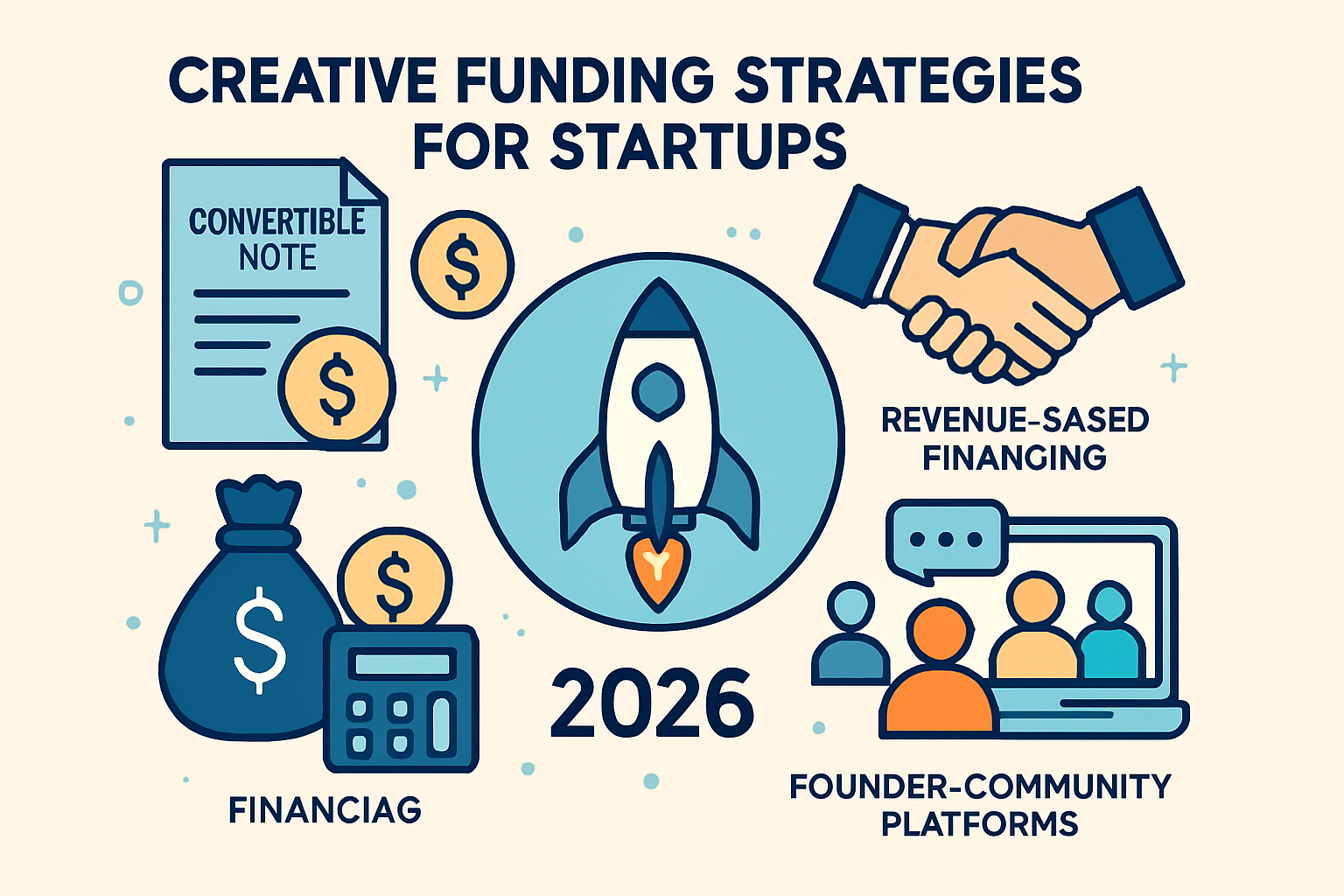
Diverse capital strategies are helping founders move from bootstrap to institutional seed funding in 2026.
The path forward for bold founders
The reality of fundraising in 2026 requires founders to blend vision with clear-eyed pragmatism. The thinning of early-stage dollars heightens competition, but it also sharpens investor focus on authentic teams, compelling stories, and tangible market signals.
Founders who tailor their narrative for today’s cautious environment, nurture investor relationships over the long term, and creatively bridge financial gaps stand out in the current fundraising landscape. A commitment to radical transparency and early preparation transforms investor scrutiny from a hurdle into an invitation for partnership.
Success comes most often to those who see investors as collaborators, not just check writers. Understanding startup runway calculations becomes essential when demonstrating responsible capital stewardship to potential partners. If you are building something ambitious with the grit and adaptability these times demand, there are still doors to open.
Frequently Asked Questions
What sectors are attracting the most early-stage investment in 2026
Specialized areas including artificial intelligence, fintech, climate solutions, and B2B infrastructure continue to attract significant early-stage capital. Founders with unique insight or technical edge in these sectors are seeing more interest despite shrinking deal volume overall.
How should I structure my pitch deck in a pre-seed round if I have limited traction
Highlight the market problem and your solution, and make sure to connect your personal story to the business. Use any form of early validation or feedback, no matter how modest, to demonstrate the credibility of your approach. Clarity and honesty about what the capital will achieve are highly valued by investors.
What are practical steps to prepare for intense investor due diligence
Organize all your business and legal documents early, be transparent about risks, and detail the assumptions behind your growth plan. Keep customer and product materials ready and be open about what you have yet to test or learn. Providing clear ownership structures and feedback transcripts also helps.
What alternatives exist if I am not ready for a traditional seed round
Founders can pursue revenue-based financing, run small SAFE rounds with flexible terms, or assemble community-driven capital from early product supporters. Pre-sales, strategic partnerships, and selective convertible notes are all viable strategies for proving traction and extending financial runway. Alternative funding approaches offer creative paths beyond traditional venture capital.
A resilient founder’s journey to seed capital is ultimately about conviction, clarity, and a willingness to adapt. If you push forward with the right narrative and a collaborative mindset, even the most challenging market can turn into a launchpad for your vision.
Start tailoring your fundraising plan today. And let investors see the drive that sets your founding story apart.