





Building Revenue-First Tech Startups in 2026: Bootstrapping Through Clarity and Simplicity
Tech founders in 2026 face a playing field shaped by scarcity and ingenuity. External funding has tightened, pushing builders toward practical growth strategies and a laser-sharp focus on products that pay for themselves. This new chapter rewards those who value clarity and simplicity. When every dollar matters, startup leaders move quickly, validate ideas fast, and pursue revenue as the ultimate proof of progress. What does that journey look like, and how are no-code tools and a feedback-driven mindset reshaping the path from sketch to scale?
Launching Quickly with a Minimum Viable Product
Getting to your first paying customer is more than a milestone. In 2026, it’s a survival tactic. Founders ruthlessly prioritize one problem and deliver value with speed, using MVPs as launch platforms. Research shows that 70 percent of MVP failures come from packing in too many features. The real winners focus on simplicity, solving one core need exceptionally well. This approach ensures market risk gets addressed while keeping expenditures lean.
No-code platforms are now integral to dramatic reductions in launch timelines. Many startups roll out MVPs in as few as eight to twelve weeks, leveraging ready-made templates or single-platform releases. Builders embrace drag-and-drop tools and cloud resources, stripping away complexity to uncover product-market fit as soon as possible.
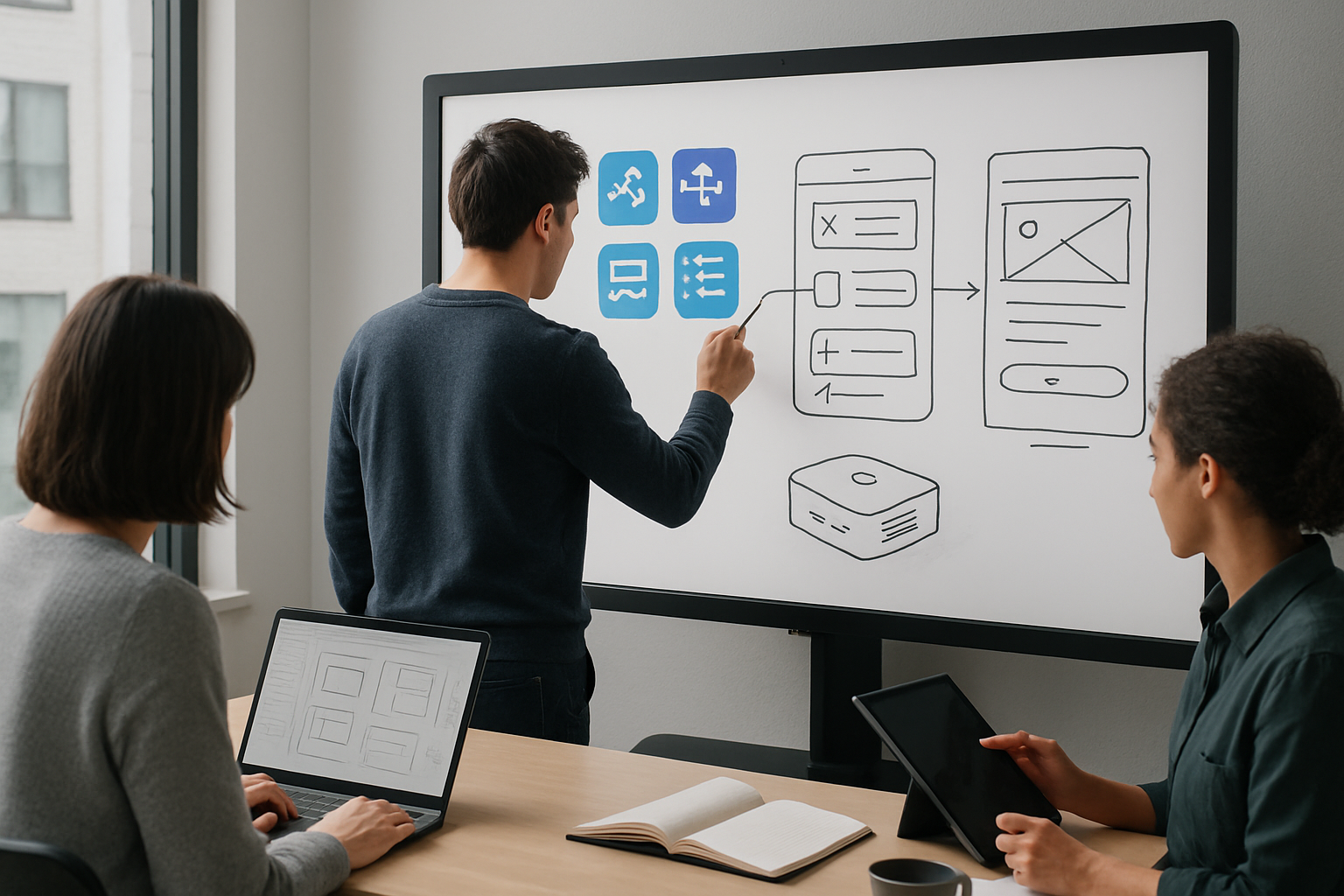
Bootstrapping teams in 2026 use no-code platforms and simple workflows to create MVPs faster than ever before.
How No-Code Tools Fuel Fast Validation and Lean Operations
No-code platforms have democratized the act of building. Startups use Bubble, Webflow, Framer, and Softr to launch full-stack web apps and automate workflows without writing traditional code. By automating repetitive tasks through platforms like Zapier, Make, and n8n, small teams punch above their weight, keeping headcount low and output high.
Current industry insights reveal that seventy percent of new apps harness no-code or low-code solutions. These builders are not only moving faster but also sidestepping hefty initial investments in specialized development. AI integration now amplifies what small teams can deliver with minimal technical overhead. With design, automation, and testing folded into simple interfaces, founders move from concept to paid pilot swiftly. And with minimal burn.
Prioritizing Customer Feedback Over Perfection
Early-stage validation is never one and done. The feedback loop begins with those first users. Builders in 2026 listen intently, tracking customer pain points and measuring satisfaction through direct channels and agile iterations. Startups that succeed embed feedback into their product cycles. Small improvements based on active listening frequently drive much larger leaps in user loyalty and conversion rates.
Teams collect insights through surveys, in-app prompts, user interviews, and even A/B tests on feature changes. This data is systematized and circles back into design decisions quickly. When a startup routinely refines its product in response to what actual paying customers want, it sidesteps the risk of drifting away from true market relevance. This clarity-first mindset greatly reduces wasted effort and brings rapid alignment between offering and demand.
“Retention, not just signups or sales, is the ultimate benchmark for product-market fit.”
Consistent iteration also turns satisfied customers into advocates. They become a source of organic referrals, helping startups grow revenue without ballooning marketing costs.
Conversion and Market Validation in a Revenue-First World
With venture capital far less accessible, startups in 2026 focus heavily on conversion. Turning trials and pilots into paid accounts is a top priority. To accomplish this, founders clarify their value proposition, sharpen onboarding, and deliver must-have features that speak directly to user pain points.
Many successful teams employ lean business model frameworks, providing a clear path from first use to paid commitment. Businesses keep technical and operational costs low through lean infrastructure, automation, and careful prioritization of revenue-driving features over speculative development.
This relentless pursuit of validation brings about one unmistakable pattern: lean startups are not waiting for funding to prove they can earn. Instead, they prove value with real customers. Then scale thoughtfully.
Startups Thriving on Clarity and Simplicity
Real-world examples from 2026 highlight the impact of a clarity-first mindset. One early-stage SaaS company focused exclusively on automating expense reporting for remote teams. Instead of chasing feature sprawl, they used no-code tools to launch a single, intuitive dashboard and secured their first paying contracts in under three months. Iterating based on user feedback, they expanded only after product-market fit was unmistakable, resulting in high retention and organic growth.
Another case saw a productivity platform targeting solo consultants. By streamlining scheduling and invoicing into one seamless workflow. And ignoring bloat. They bootstrapped to five-figure monthly recurring revenue within half a year. Both teams credited their results to a refusal to build what users did not want, and a willingness to cut every nonessential step in their processes.
Clarity-first startups maintain sharp communication within their teams and with their customers. Goals are unambiguous. Every experiment, feature, and interaction gets weighed against real revenue impact.

A clear and focused product interface resonates with customers and drives revenue-first growth in bootstrapped startups.
Building for Sustainable Revenue Through Authentic Validation
Sustainable success in tech is now defined by rapid validation and constant adaptation. Every feature must earn its keep. Teams succeed by seeking real signals from active users rather than theoretical projections or vanity metrics. Subscription models, transaction fees, and pay-as-you-go options provide stable revenue while managing risk.
When bootstrapping, founders often turn to alternate sources for early cash flow, like consulting or partnerships, but the most sustainable model remains direct product revenue. By doubling down on what actually works, startups can drive profitability and create a resilient foundation in turbulent times.
The Path Forward for Revenue-First Founders
For every tech founder in 2026, honing in on clarity and speed is not just a best practice. It is the difference-maker. Teams that consistently question which features and channels truly matter soon find their time and resources aligned with real return. Revenue-first means testing ideas early, validating with purpose, and staking the company’s future on the ability to win paying users without waiting for a windfall.
While fast attribution marketing can accelerate user acquisition, the foundation remains building what customers truly need. Simplicity erases confusion for both builders and customers. When products focus on their core value and shine in their execution, market validation and conversion follow as natural results.
For founders facing the mental demands of this journey, implementing mental resilience strategies becomes critical to sustaining the intense focus required for revenue-first building.
Launching, improving, and thriving as a tech startup in this era is less about chasing the next big thing and more about finding a true fit for a true need. By building less but building smarter, founders leave space for sustainable growth and scale.
If you are ready to cut through the noise and put revenue first in your tech journey, start by stripping back, listening hard, and seeking feedback that leads to clarity. The lean path is full of opportunity for those willing to build what actually counts.
Frequently Asked Questions
What is a revenue-first approach for startups?
A revenue-first approach means focusing on earning money through real customers as quickly as possible. Startups using this strategy prioritize building a simple product, validating with actual users, and investing only in features or marketing efforts that directly contribute to early revenue.
How does a minimum viable product help in bootstrapping?
A minimum viable product allows startups to reach the market quickly and test demand while spending the least amount possible. It serves as a lean prototype to validate assumptions, gather user feedback, and secure the first paying customers. All without over-investing in features users may not want.
Why are no-code tools so important to startups in 2026?
No-code platforms and automation give startups more flexibility and speed. These tools help non-technical founders build and launch products in weeks instead of months, reducing the need for large development budgets while still allowing for experimentation and iteration.
What role does customer feedback play in sustainable startup growth?
Customer feedback reveals how well your solution fits market needs. Honest input from early users guides meaningful improvements, strengthens retention, and can turn customers into advocates. Incorporating their feedback into product updates helps ensure ongoing relevance and growth.
Can bootstrapped startups scale without venture capital?
Yes, many startups prove they can grow profitably without venture funding by relying on organic revenue, focused product offerings, and clarity-driven decision making. These businesses stay nimble, listen closely to users, and expand only when their solution has already won enthusiastic paying customers.