



Bootstrapping a Tech Startup in 2026: Overcoming the New Funding Realities
Bootstrapping a Tech Startup in 2026 Overcoming the New Funding Realities
Launching a tech startup in 2026 has taken on an entirely new dynamic. The traditional path of chasing venture capital has been reshaped by shifting investor priorities, widespread adoption of artificial intelligence, and a wave of startup founders committed to building resilient businesses. Bootstrapping is no longer just a tactic for the underfunded, it is a strategic choice for many who want control over vision, product, and growth. What does it take to thrive as a bootstrapped founder in a hyper-competitive digital world?
The State of Bootstrapped Startups in 2026
Bootstrapping has seen a major resurgence, driven by founders prioritizing sustainable growth and autonomy over rapid, investor-fueled scaling. Major trends in 2026 highlight multiple reasons entrepreneurs now forgo early venture capital: economic uncertainty, increased scrutiny on business fundamentals, and a preference for building profitable, customer-led operations from the earliest days. This year, more tech founders are leveraging personal savings, customer pre-sales, and strategic partnerships to fund their earliest stages.
Several influential reports note that adaptive forms of capital. Ranging from public grants to platform-driven accelerators. Have made it easier for teams to get traction without institutional money. Rigorous focus on profitability and a refusal to rely on speculative burn rates sets these founders apart. Bootstrapping is celebrated as a way to cultivate operational discipline and safeguard long-term independence rather than simply a last resort for those lacking connections.
Creative Funding and Lean Innovation
Bootstrapped startups often combine creative financing with lean business model strategies. Founders turn to revenue-based financing, governmental programs, or even micro-funding platforms. The rising prominence of alternative capital sources means more startups are self-sustaining, sometimes skipping external validation until a far later stage. When their negotiating position is strongest. The mindset has shifted from chasing funding milestones to focusing on tangible, market-driven successes.

A lean bootstrapped tech team collaborates using digital tools in 2026.
Leveraging AI and No Code to Power Bootstrapped Success
When budgets are tight, technology becomes even more essential. The past year has seen a huge increase in the use of AI-driven platforms and no code solutions, especially among bootstrapped tech founders seeking efficiency and speed. What used to require entire dev teams or hefty software investments is now achievable through accessible, affordable tools. Some of the most effective platforms for 2026 include no code app builders like Bubble and Lobe, workflow automation tools such as Make.com or Activepieces, and all-in-one AI subscriptions that cut cost while delivering tremendous power.
AI-driven content creation, personalized marketing, and data analysis take much of the manual labor out of tasks like market research or customer onboarding. These advances allow small teams to punch well above their weight, providing sophisticated user experiences with resources that would have been unimaginable just a few years ago. With top-tier design, automation, and even customer service tools available at startup-friendly prices, founders are rewriting the rules for what can be built quickly on a lean budget.
Building a Sustainable Growth Model
Sustainability sits at the center of every successful bootstrapped venture in 2026. Relying on organic growth means every dollar and every decision matter. Founders are adopting startup growth strategies rooted in discipline, continuous learning, and customer focus. Data-driven decision making enables product launch cycles that prioritize validated feedback, reducing waste and increasing the odds of early traction.
Some winning approaches include launching with a minimal viable product to generate early revenue, iterating quickly to match real customer needs, and tapping into network effects through partnerships or community-driven marketing. These principles help startups scale efficiently, without overspending or chasing misleading growth metrics. Bootstrapped founders have become experts at finding creative ways to keep cash flows positive, such as pre-selling new features, offering early access memberships, or forming service-based collaborations to fund product development.
A powerful growth story now rests not just on how much capital you raise, but how effectively you turn each investment of time and money into a lasting relationship with users.
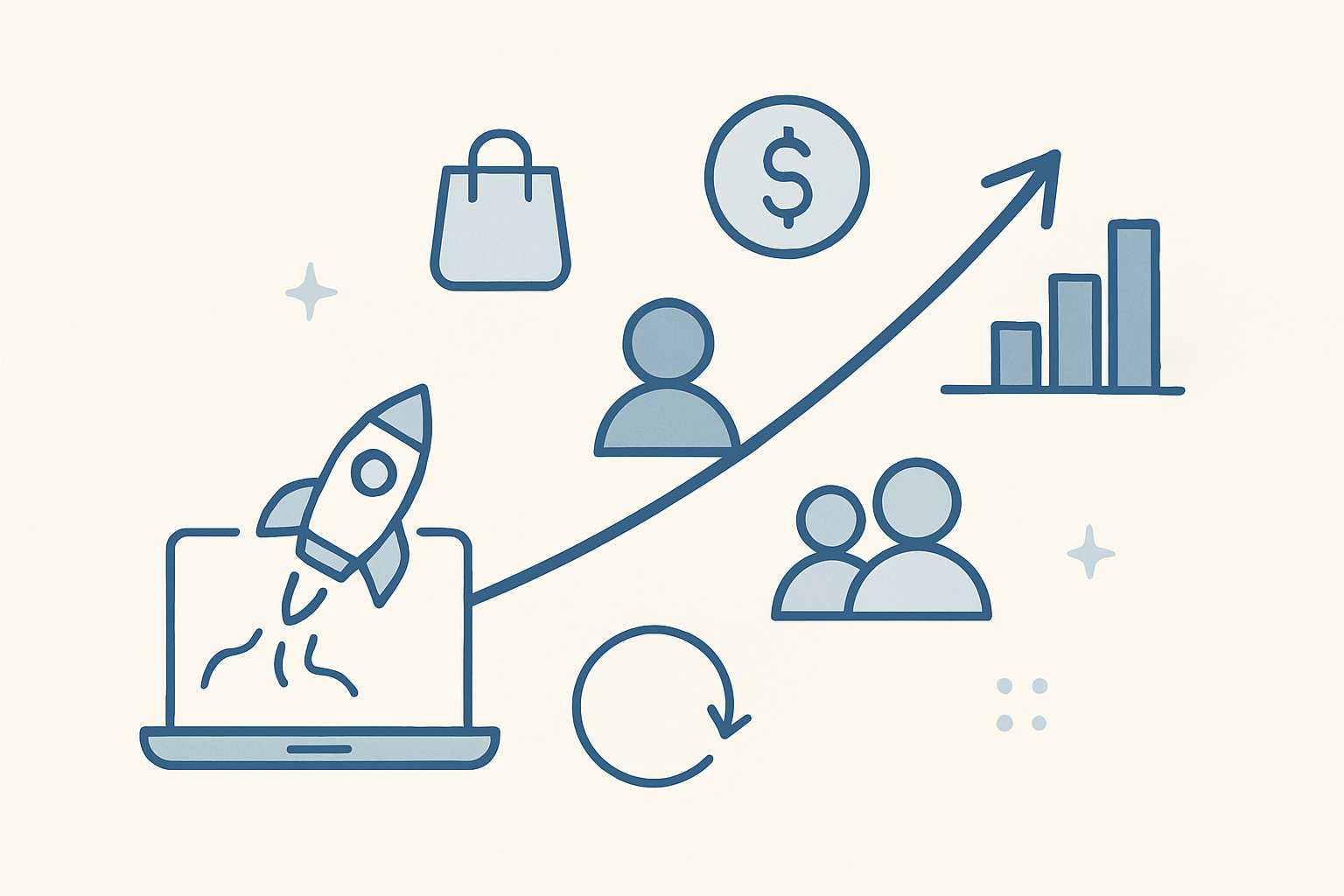
Visualization of sustainable growth and early revenue in a 2026 tech startup.
Case Studies Breaking Through Bootstrapping Barriers
Across the tech world, several standout companies have proven the advantages of the bootstrapped approach. Basecamp has long operated profitably while resisting pressure to take outside capital, staying closely aligned with customer needs. In 2026, new entrants such as AI-native SaaS companies and digital agencies have rapidly scaled to millions in revenue by leveraging AI automation and relying on direct customer feedback for product evolution.
For example, several SaaS companies now operate with two to ten person teams, maintaining profitability by using flexible AI agent platforms to cut overhead costs. Others have found that combining service offerings with product development enables steady income even as the core product matures. What unites these founders is the willingness to continually optimize, test, and adapt without waiting for the next round of funding. Each startup’s journey underscores the reality that resourcefulness is the ultimate advantage in a volatile funding landscape.
The Future of Bootstrapped Innovation
Bootstrapping is no longer a fallback. It is now a deliberate path to sustainable innovation and growth. The emergence of accessible AI, flexible no code tools, and collaborative platforms makes it easier for founders to build remarkable solutions on their own terms. As the boundaries for tech entrepreneurship evolve, so does the definition of success. Those who remain adaptable, data-driven, and creative will discover opportunities where others see obstacles.
Startups flourishing in 2026 have shown that endurance, a customer-first mindset, and technological savvy can outpace massive funding rounds. The chance to own your vision, create a healthy work culture, and build genuine value sets a new benchmark for what it means to grow a tech business. Understanding founder mental resilience strategies becomes crucial during this demanding but rewarding journey. Are you ready to join this new wave of visionary builders?
Take the leap today: explore lean strategies, leverage the latest AI tools, and claim your independence as a tech founder in this groundbreaking year for innovation.
Frequently Asked Questions
What are the biggest challenges for bootstrapped tech startups in 2026
Bootstrapped founders most often grapple with limited initial capital, the need for rapid product validation, and competition from heavily funded startups. Maintaining positive cash flow and attracting early adopters are ongoing priorities.
Which AI tools are most useful for lean tech startups
Popular choices include no code app builders such as Bubble and Lobe, workflow automation tools like Make.com and Activepieces, and multi-model AI suites that combine content generation, analytics, and automation into cost-effective subscriptions.
How do startups generate revenue early without outside investment
Early revenue often comes from launching a minimal viable product, pre-selling features, or onboarding pilot customers willing to pay for early access. Service-based income can also help fund product development until steady user-based revenue builds.
Is it possible to scale globally while bootstrapping in 2026
Yes, as digital platforms and automation lower barriers to entry, global scaling is increasingly possible for lean teams. Access to cloud infrastructure, online marketplaces, and cross-border partnership models empower startups to grow internationally without needing significant outside capital.
Why are more founders choosing to bootstrap instead of seeking VC funding
Many founders want to retain ownership, set their own pace, and focus on longevity rather than hypergrowth. Bootstrapping promotes operational discipline and minimizes the risks associated with high-burn, venture-backed paths. However, some may eventually transition to hybrid funding approaches as they scale.