





Leveraging AI as Your Co-Founder: Bootstrapped Startup Success Stories for 2026
Innovation in 2026 is moving at incredible speed. Those who thrive in the world of lean tech startups have reimagined what resourcefulness looks like. A wave of founders are joining forces with AI as their digital co-founders, building thriving companies without mountains of external funding. The rules of the game have changed, with AI-native startups making smart tools work double time for everything from research to customer support and even complex product design.
AI Reshaping Core Startup Operations
Founders who understand how to wield AI are transforming the DNA of their businesses. Machine learning models and smart automation power everyday decision-making, pulling from huge data lakes to offer insights in minutes instead of weeks. Does market research grind your progress to a halt? Today’s AI platforms can analyze trends, draft competitor analyses, and surface hidden opportunities from raw market chatter in real time.
Customer service, a notorious drain on time and morale for tiny teams, has also been reimagined. Next generation chatbots and intelligent help desks resolve issues, interpret sentiment, and escalate only what truly needs a human touch. These tools improve as they learn, so every customer conversation makes the product and experience better.
Product development has also been quietly revolutionized. Generative models help founders test new ideas quickly, automate mockups, and optimize feature roadmaps on a sprint-to-sprint basis. This shift to AI-driven workflows allows solo founders and small teams to do what once required whole product squads. The effect? Faster releases, fewer costly detours, and an experimentation culture that translates to sharper product-market fit.
Real Bootstrapped AI Startup Success Stories
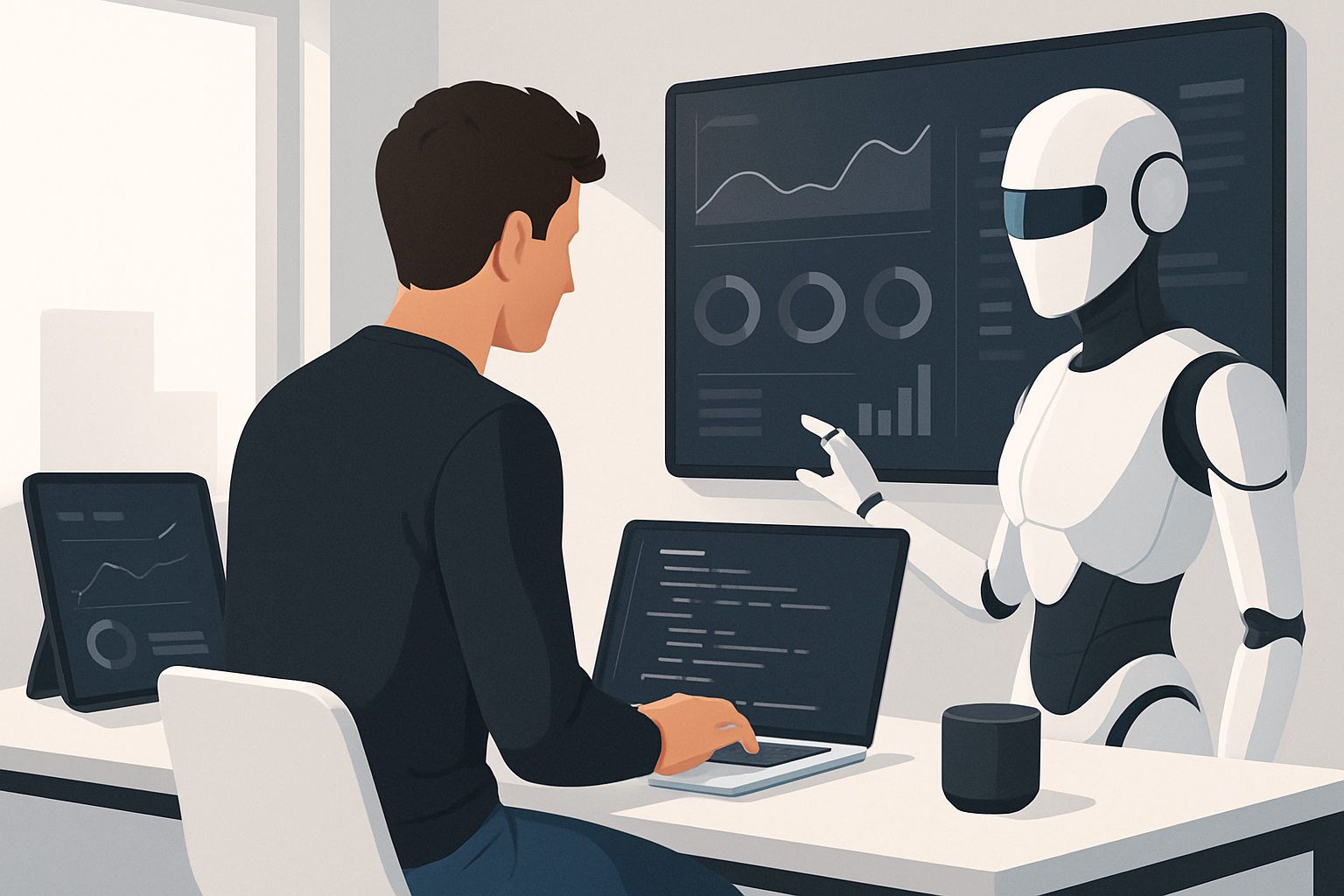
Curious what this looks like in action? Base44 is an example that shows how solo founders are leveraging AI to fuel growth. The founder bootstrapped their way to profitability by having AI write almost all of the code, freeing energy for high-level vision and sales. Growth was so strong that acquisition offers rolled in during tumultuous times, proving how tech resilience can come from smart AI adoption.
Another standout is Nodalli, a professional networking tool built with AI at its core. Nodalli’s team of just a handful of people developed a platform that streamlined networking by letting AI handle calendar coordination, conversation suggestions, and summary notes after events. Keeping team size small cut costs dramatically, and the AI-native approach allowed for launch timelines that left competitors scrambling to keep up.
Even established names like CoreWeave. A company that bootstrapped its way to a billion-dollar valuation. Have leaned into custom AI tools for workflow automation, dramatically increasing output without scaling headcount. These stories are echoed across industries, from logistics disruptors to niche SaaS providers, all reiterating one truth. Strategic AI adoption multiplies your bootstrap advantage.
Balance Between Automation and Human Skills
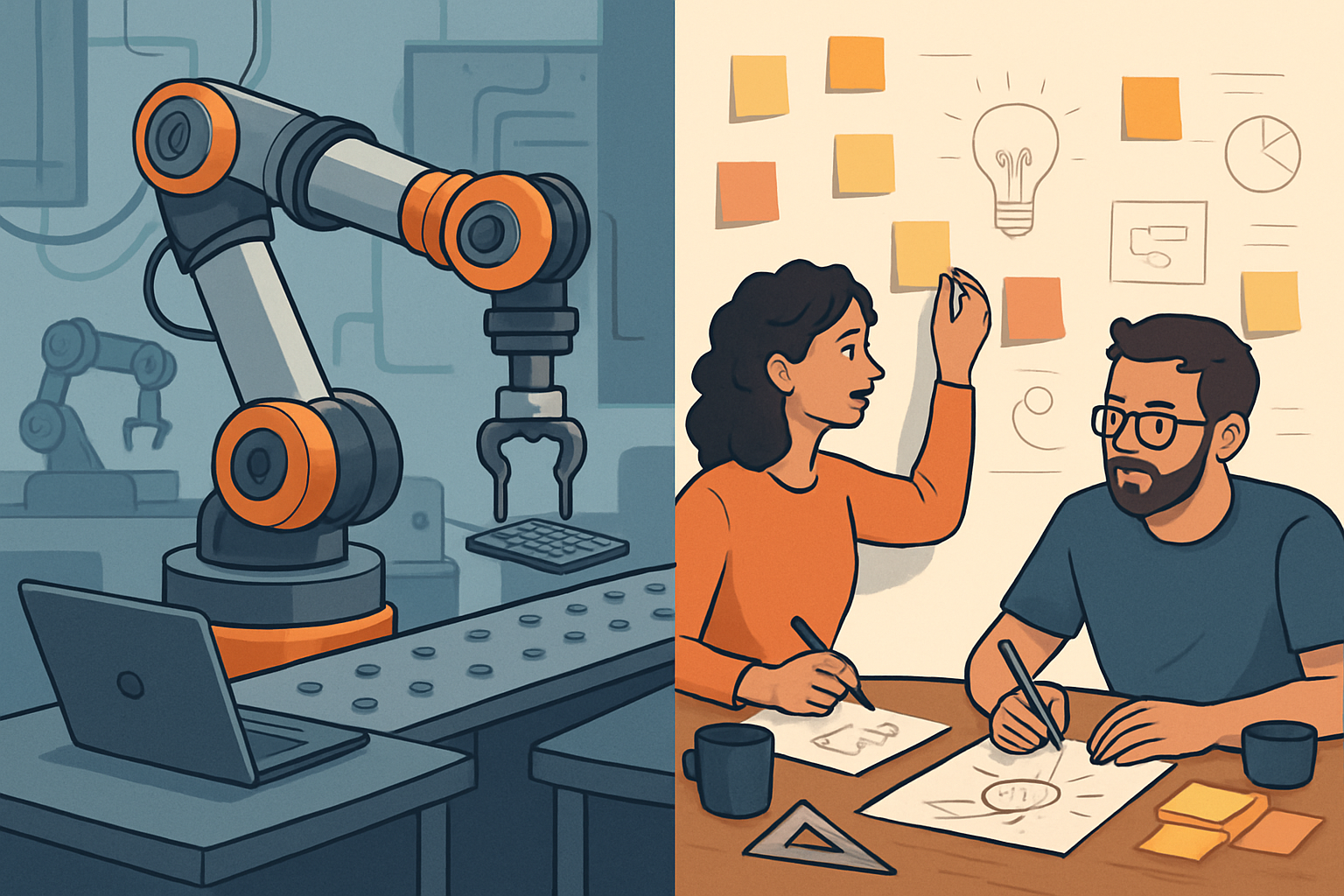
As automation claims more space in the daily operations of startups, the question becomes what uniquely human work should founders and their tiny teams focus on? Founders who master this balance harness AI to handle data entry, scheduling, customer queries, and basic analytics. Freeing up time for the relationship building and creative decision-making that drive progress.
Research studies project that by the end of 2026, forty percent of enterprise applications will employ task-specific AI agents, with only a single percent seeing full human replacement. That figure tells a clear story. AI is a force multiplier, not a substitute for the authenticity, experimentation, and empathy that spark loyalty and growth.
Customer engagement flourishes when chatbots handle the routine, letting real people solve the rare, nuanced issues that win trust. In product development, teams lean on generative technology for mockups and ideation but rely on founders’ intuition to refine features, adapt to user feedback, and innovate in ways models cannot predict.
Practical Steps for Making AI Your Startup Co-Founder
Building with an AI-first approach is accessible, even for teams starting from scratch. Founders in 2026 increasingly follow these steps:
-
Start Manual for Deep Learning: Before automating, founders run core processes by hand. This reveals which workflows are clunky, what users value most, and where repetitive tasks hide.
-
Implement Ready-Made AI Tools: Experiment with agentic AI platforms for handling support, building wireframes, and analyzing competitors. Affordable no-code platforms and open-source AI libraries keep costs close to zero in the early days.
-
Automate Gradually, Not All at Once: Begin automating low-risk, repetitive workflows. Use analytics to monitor whether automation improves speed or quality, and adjust until the balance feels right.
-
Let Data Inform Decisions: With every customer interaction, data flows through your systems. Learn to read these signals, letting the AI iterate and adjust as the product finds its voice.
-
Keep Human Energy for Irreplaceable Work: Relationships, creative leadership, and sales strategy require a human touch. Mastering mental resilience and avoiding burnout becomes crucial as founders balance high-leverage human work with AI automation. Make sure your schedule reflects this priority and delegate everything else to your AI co-founder.
Trends Tech Founders Need to Know in 2026
AI-native startups deliver results in quarters instead of years because their founders accept that the old rules of scaling do not apply. Speed, flexibility, and ruthless prioritization are hallmarks of this new era. The rise of agentic AI. Tools that actively execute workflows and anticipate needs. Means startups can punch above their weight from day one.
The biggest winners are those who view their stack as a living system. These founders are constantly swapping tools, learning from data, and keeping their tech nimble. Industry reports show that small teams achieve forty percent higher productivity than traditional setups, thanks to AI’s influence. Bootstrapped teams with a few laser-focused contributors are outperforming larger, slower companies in shipping new features and adapting to market feedback.
SEO keywords like “AI-native startups” and “tech founder tips” represent more than just traffic opportunities. They point to an emerging philosophy. Productivity is not about working more hours, but using tools that multiply every hour you put in.
Making the Most of Your Runway
A powerful benefit of integrating AI as your co-founder is the extended financial runway it creates. By automating crucial functions with AI, founders reduce burn rates and keep operational costs under control, making it possible to test more ideas and refine the business before outside capital ever enters the equation. When you’re ready to scale beyond bootstrap funding, understanding hybrid startup funding strategies becomes essential for maintaining the lean advantages you’ve built. A lean mindset guides every choice. That means resisting the urge to overstaff and instead empowering the smallest possible team to do great work.
AI does not just bring efficiency. It also delivers the resilience needed for unpredictable markets. When external shocks hit, the startups that have adopted this AI-enabled approach are the quickest to pivot. Quick turnarounds are possible because core processes. Market analysis, customer experience, and product iteration. Are built to adapt at machine speed. For the bootstrapper, every saved resource is another experiment pursued, another iteration delivered, and another shot at sustainable success.
Frequently Asked Questions
What are the most valuable tasks for AI to handle in a bootstrapped startup?
AI is best leveraged for tasks like automating customer support conversations, handling initial market analysis, drafting content or code, scheduling, and monitoring analytics so founders are free to tackle complex decision-making and creative work.
How can I make sure I am not losing the human touch when relying on AI?
Regularly review automated interactions and invite customer feedback to identify moments that need a personal approach. Focus human energy on nuanced problems, relationship building, and scope new features with empathy. AI should be a helpful force, not a wall between your team and your users.
What is the first step to integrating AI into my startup’s workflow?
Run your initial core business operations manually to map where you spend the most time and what brings the most value. Adopting lean business model principles alongside AI tools for small, repetitive processes before moving toward more advanced automation. This gradual approach preserves quality while maximizing learning.
Can an AI-driven approach help during economic uncertainty?
Startups with structured, automated operations adapt faster to changing conditions because they spend less on overhead, respond rapidly to user feedback, and keep development cycles short. Resilience comes from efficient resource use and the ability to pivot quickly.
Which types of startups see the biggest lift from AI co-founders?
Industries with high-volume digital interactions and rapid feedback loops. Such as SaaS, logistics, customer experience platforms, and those with frequent product iteration. Gain the most from AI adoption. Solo founders and small teams especially benefit, as their leverage multiplies the impact of every decision.
AI has evolved from a novel tool into a dependable partner at the heart of the world’s most agile startups. Founders willing to rethink their approach, strip away the unnecessary, and fully embrace these digital co-founders are quietly rewriting the playbook. The story of startup success in 2026 belongs to those who combine resilience, creativity, and the discipline to let smart automation multiply their strengths.
Start your lean journey with intention. Look for areas where an AI-native approach can clear your path, then give your energy to the bold, human decisions only you can make. Your bootstrap story starts where invention and ambition meet the world of tomorrow. Led by an AI that never sleeps.